Products
Electromagnetic water meters

Electromagnetic water meters

Size: DN25--DN1000
Introduction
Application
Technical Data
Installation
Introduction
Electromagnetic water meter is a kind of instrument for measuring the volume flow of conductive liquid based on Faraday's principle of electromagnetic induction. It has the characteristics of wide range, low initial flow, low pressure loss, real-time measurement, cumulative measurement, bi-direction measurement, etc. It mainly uses DMA zoning, online monitoring, water loss analysis and statistical settlement of water supply mains.
Advantages
1 No blocking parts inside of measuring tube, low pressure loss and low requirements for straight pipeline. 
2 Variable diameter design, improve measurement accuracy and sensitivity, reduce excitation power consumption. 
3 Select suitable electrodes and liner, with good corrosion resistance and wear resistance. 
4 Full electronic design, strong anti-interference ability, reliable measurement, high accuracy, wide flow range.
Application
Electromagnetic water meter is a metering instrument specially designed for the actual requirements of water supply enterprises, specially designed for water industry, which can optimize water supply and ensure accurate water trade measurement and settlement. Practice has proved that electromagnetic water meter is the ideal choice to solve the measurement contradiction of large water users. In addition, electromagnetic water meters are widely used in chemical industry, environmental protection, metallurgy, medicine, paper making, water supply and drainage and other industrial technology and management departments.
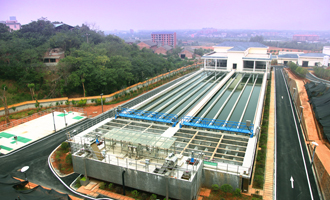
City water supply
City water supply
Farm irrigation
Farm irrigation
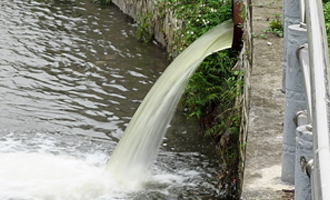
Waste water treatment
Oil industry
Oil industry
Pharmaceuticals industry
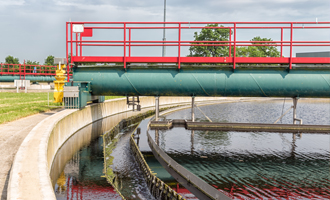
Water supply and drainage
Technical Data

Table 1: Model Selection Table

QTLD-X   
Size DN25-DN1000  

Table 2:  Measure Range

DN (mm) (R)Q3/Q1 Flow(m³/h)
Q1 Q2 Q3 Q4
25 400 0.04 0.064 16 20
32 400 0.0625 0.1 25 31.25
40 400 0.1 0.16 40 50
50 400 0.1575 0.252 63 78.75
65 400 0.25 0.4 100 125
80 400 0.4 0.64 160 200
100 400 0.625 1 250 312.5
125 400 1 1.6 400 500
150 400 1.575 2.52 630 787.5
200 400 2.5 4 1000 1250
250 400 3.75 6 1500 1875
300 400 4 6.4 1600 2000
350 400 6.25 10 2500 3125
400 400 10 16 4000 5000
450 400 10 16 4000 5000
500 400 16 25 6300 7875
600 400 25 40 9922 12403
700 400 34.63 55.4 13850 17312.5
800 400 45.23 72.36 18090 22612.5
900 400 57.23 91.56 22890 28612.5
1000 400 70.65 113.04 28260 35325
Installation
Installation environment selection
1. Stay away from devices with strong electromagnetic fields. Such as large motor, large transformer, large frequency conversion equipment.
2. The installation site should not have strong vibration, and the ambient temperature does not change much.
3. Convenient for installation and maintenance.


Selection of installation location
1. The flow direction mark on the sensor must be consistent with the flow direction of the measured medium in the pipeline.
2. The installation position must ensure that the measuring tube is always filled with the measured medium.
3. Select the place where the fluid flow pulse is small, that is, it should be far away from the water pump and local resistance parts (valves, elbows, etc.)
4. When measuring the two-phase fluid, choose the place which is not easy to cause phase separation.
5. Avoid installation in the area with negative pressure in the tube.
6. When the measured medium easily causes the electrode and the inner wall of the measuring tube to adhere to and scale, it is recommended that the flow rate in the measuring tube be no less than 2m/s. At this time, a tapered tube slightly smaller than the process tube can be used. In order to clean the electrode and measuring tube without interrupting the flow in the process tube, the sensor can be installed in parallel with a cleaning port.


Upstream straight pipe section requirements
The requirements of the sensor on the upstream straight pipe section are shown in the table. When the diameters of the upstream and downstream straight pipe sections are inconsistent with those of the electromagnetic cold water meter, the tapered pipe or the tapered pipe should be installed, and its conical Angle should be less than 15° (7° -8 ° is preferred) and then connected with the pipe.
 Upstream resistance 
components

Note: L is straight pipe length
Straight pipe requirements L=0D can be considered as a 
straight pipe section
L≥5D L≥10D

Note :(L is the length of straight pipe section, D is the nominal diameter of sensor)

Send Your Inquiry
Exported to more than 150 countries around the globe, 10000 sets/month production capacity!
Copyright © Q&T Instrument Co., Ltd. All Rights Reserved.
Support: Coverweb