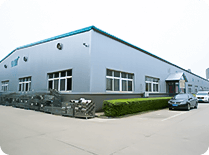
Food Plant Resolves Billing Disputes by Switching to Vortex Precession Flowmeter with PT Compensation
A food processing facility has successfully eliminated long-standing gas metering disputes after replacing its legacy flowmeter with a swirl (vortex precession) flowmeter equipped with pressure and temperature compensation. The upgrade now accurately captures extreme day-night load swings inherent to batch cooking operations.
— A local food factory operating on an intermittent production schedule faced persistent settlement conflicts due to inaccurate gas metering. During daytime cooking shifts, gas consumption spiked to more than ten times the nighttime rate, when only a few small burners remained active. The plant's original flowmeter had a high minimum flow threshold, causing it to barely register at night. This led to frequent billing disputes. The issue was fully resolved after the facility switched to a vortex precession flowmeter integrated with pressure and temperature compensation, achieving full coverage across both day and night load profiles.
Root Cause Analysis
Wide range ratio stems from the detection principle. After fluid passes through spiral blades and enters precession, the vortex core rotates around the axis. The precession frequency is approximately linear with flow velocity, and low-frequency segments can still be stably captured, delivering a typical turndown ratio of 10:1 to 20:1.
Gas measurement demands temperature and pressure compensation. For compressible media, measuring working-condition volumetric flow alone is insufficient for direct settlement. Measured pressure and temperature must be used together with the compression factor to convert to standard conditions. Omitting this step converts volume discrepancies into disputes.
Structural design defines operational boundaries. With no moving parts and battery-powered capability, the meter suits locations without mains power. However, the spiral blade acts as a flow-restricting element, resulting in relatively high pressure loss. Piezoelectric detection is sensitive to vibration, and dust- or liquid-laden media can cause fouling that alters the flow coefficient.
Corrective Measures
Assess media and boundary conditions first. The meter is suitable for relatively clean gases. For dust- or liquid-laden coal gas or wellhead gas, install upstream filtration separators and blowdown valves. Exclude applications involving large-diameter high-flow, pressure-loss-limited conditions, or strong vibration without damping.
Calculate pipe diameter based on flow range. Position normal flow within 1/3 to 2/3 of the range. Verify lower-limit flow by dividing upper-limit flow by the turndown ratio.
Provide adequate straight-run lengths and spacing. Maintain 5D–10D upstream and 3D–5D downstream (subject to manufacturer specifications). Install upstream of control valves and keep distance from compressor or pump discharges. Add buffer sections and supports where pulsation is significant.
Equip full compensation. Route pressure and temperature signals into the meter or totalizer, input gas composition data, and conduct periodic verification. For battery-powered units, log and adhere to replacement cycles.