High-Temperature Steam Testing Guide for Vortex Flowmeters
High-temperature steam above 300°C can easily damage vortex flowmeters or cause dangerous failures if tested improperly. This safety guide helps avoid data errors, instrument burnout, and safety risks.
1. Pre-Test Safety & Preparation
Before testing, reduce pipe pressure and temperature to safe levels, and wear heat-resistant gloves and a face shield.
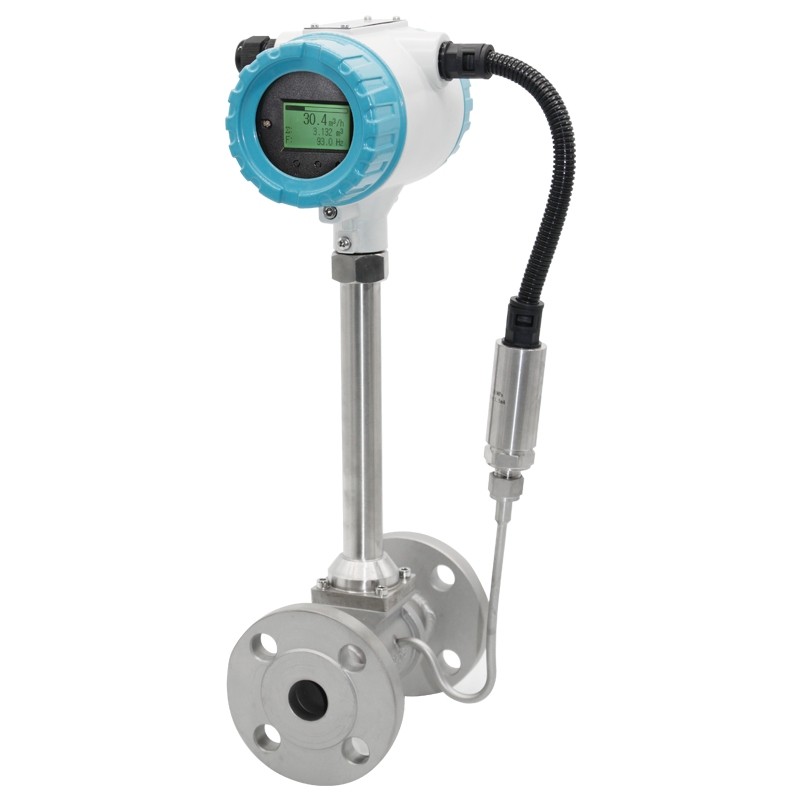
Critical insulation rule: Do NOT remove pipe insulation, but keep at least half of the sensor extension rod exposed for cooling. Enclosing the transmitter in insulation will overheat and destroy electronics.
2. Installation & Straight Pipe Requirements
Unstable flow from elbows or valves causes severe signal interference.
- Upstream straight pipe: 15D–20D (over 40D if control valves are nearby)
- Downstream straight pipe: ≥5DErratic readings usually stem from poor installation, not the meter itself.
3. Parameter Setting: Saturated vs. Superheated Steam
Mixing up steam types is a major cause of invalid data.
- Superheated steam: Requires both temperature and pressure compensation.
- Saturated steam: Needs at least one compensation parameter.Poor insulation may turn saturated steam into wet steam, leading to highly inaccurate results if uncorrected. Ensure correct RTD and pressure transmitter placement.
4. Signal Testing: Check Waveforms, Not Just Readings
Use an oscilloscope to check for clean pulse signals. Excessive noise often comes from pipe vibration. Install vibration-resistant mounts and pads to reduce interference.